

Skunks are known for their distinctive black and white stripes and their potent odor. Many people wonder when these creatures come out, especially if they live in areas where skunks are common. While skunks are nocturnal animals, they are also active during the daytime, particularly during the early morning and late afternoon.
Skunks typically emerge from their dens in late winter or early spring, depending on the climate and location. In warmer areas, they may come out as early as February, while in colder regions, they may wait until April or May. Skunks are most active during the warmer months of the year, and they tend to retreat to their dens during the winter. However, they may still come out occasionally during the colder months if the weather is mild.
Understanding Skunks
Skunks are a type of nocturnal animal that is known for its unique defense mechanism – the ability to spray a foul-smelling liquid when threatened. There are several species of skunks, but the most common ones are the striped skunk and the spotted skunk.
Skunks are members of the weasel family and are found in various parts of North and South America. They are omnivores and feed on a variety of foods, including insects, small mammals, fruits, and vegetables.
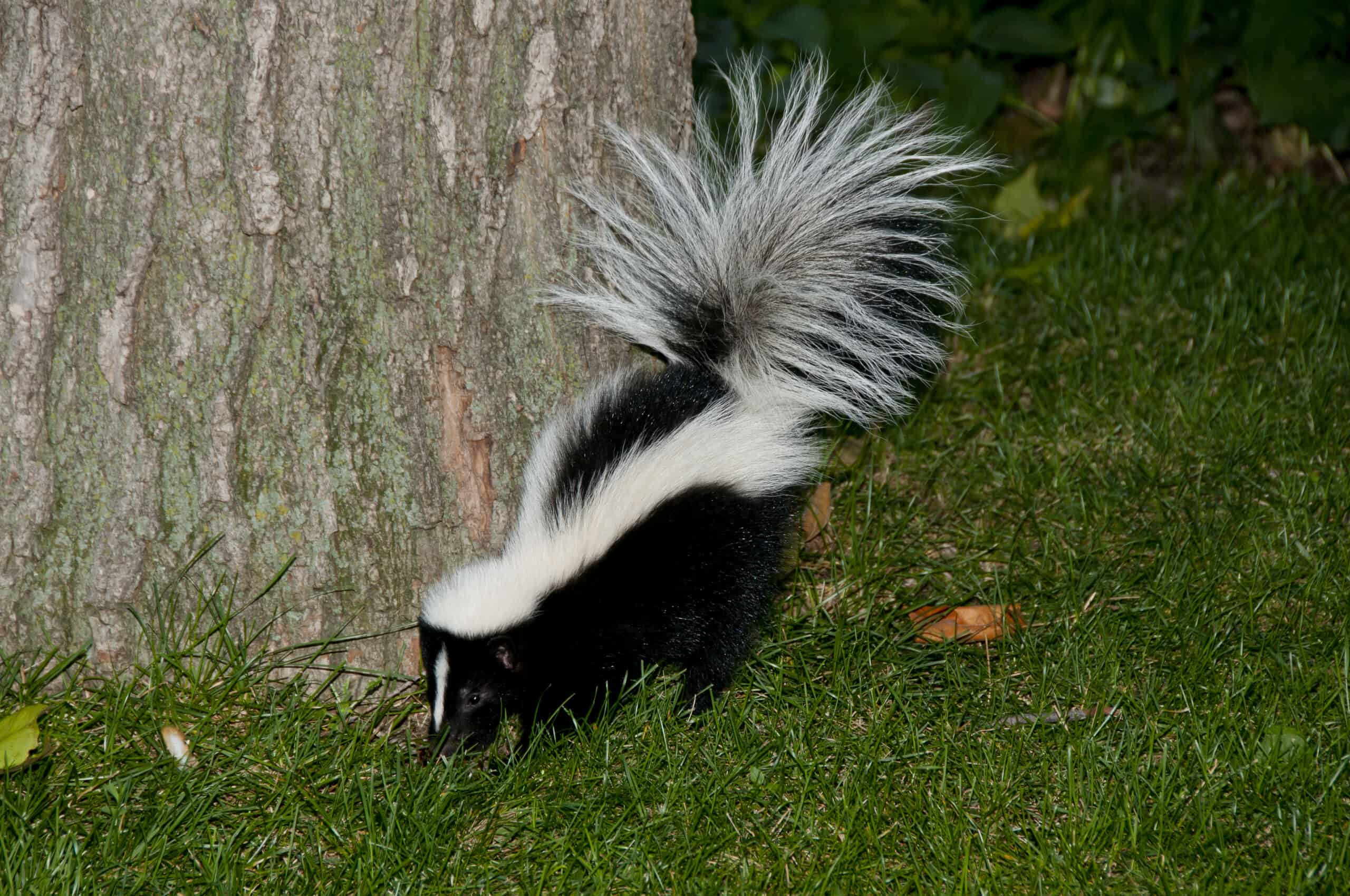
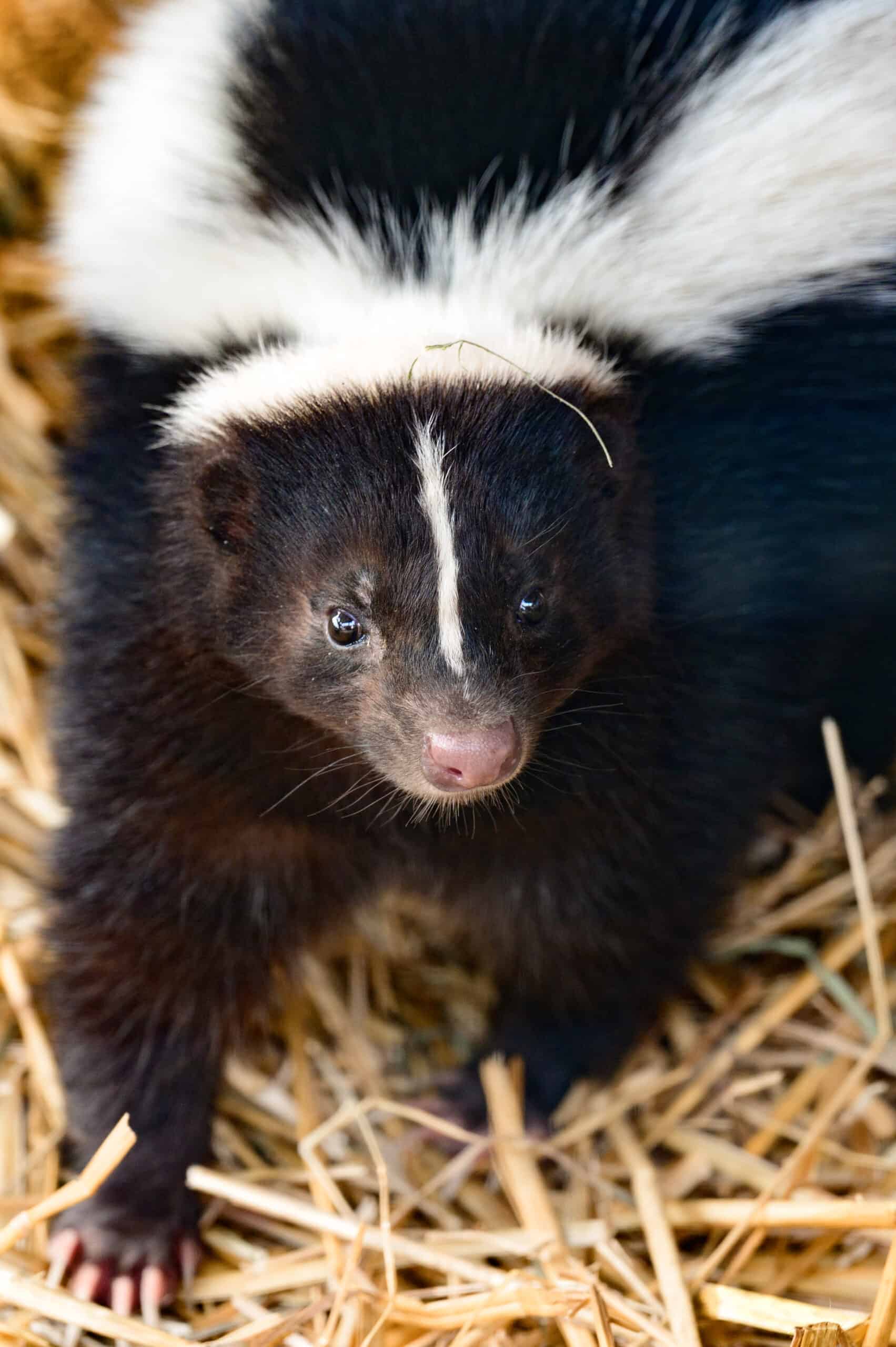
One of the most distinctive features of skunks is their black and white striped or spotted fur. This coloring serves as a warning to potential predators that they are not to be messed with. Skunks are generally not aggressive and will only spray as a last resort when they feel threatened.
Skunks are primarily nocturnal animals, meaning that they are most active at night. They are also known to be solitary creatures, but may occasionally gather in groups during mating season.
Overall, skunks are fascinating creatures that play an important role in the ecosystem. While they may not be the most popular wildlife, they are certainly worth learning more about.
Skunk Behavior and Habits
Skunks are nocturnal animals, which means they are most active during the night. They are known to be solitary animals and prefer to live in dens. Skunks do not hibernate but may become inactive during the winter months.
When it comes to behavior, skunks are generally non-aggressive unless they feel threatened. They will often give a warning before spraying their musk, which is a strong odor that can be difficult to remove. If you encounter a skunk, it's best to give it space and avoid startling it.
Skunks are known for their musk, which is a defense mechanism used to ward off predators. The musk is a strong odor that can linger for days, making it difficult to remove from clothing and other surfaces. Skunks will usually only spray their musk as a last resort when they feel threatened.
In summary, skunks are nocturnal animals that prefer to live in dens. They do not hibernate but may become inactive during the winter months. Skunks are generally non-aggressive but will spray their musk if they feel threatened. It's important to give skunks space and avoid startling them to prevent being sprayed.
Skunk Diet
Skunks have a varied diet that changes depending on the season and their location. They are omnivores and eat both plant and animal matter.
During the warmer months, skunks tend to eat insects such as crickets, beetles, and larvae. They also eat small rodents, mice, and other small animals. Skunks also enjoy eating berries and nuts.
In the colder months, skunks have a harder time finding food. They will eat rodents, such as mice, and other small animals. They will also eat seeds and nuts.
Skunks are known for their ability to dig up grubs from lawns. They have a great sense of smell and can detect the grubs beneath the soil. Skunks will dig up the grubs and eat them.
Overall, skunks have a varied diet that includes both plant and animal matter. They are opportunistic feeders and will eat whatever is available to them.
Skunk Habitat and Denning
Skunks are adaptable creatures that can thrive in a variety of habitats, including forests, fields, and suburban areas. They prefer areas with access to water and abundant food sources, such as insects, small mammals, and fruits. Skunks are nocturnal animals and are most active during the night.
When it comes to denning, skunks are known for their ability to dig their own dens or utilize existing dens. They often den in natural areas, such as woodpiles, brush piles, and hollow logs. Skunks may also den under sheds, porches, and decks, or in abandoned buildings.
During the winter months, skunks may seek shelter in dens to protect themselves from the cold. They may also den in groups to conserve warmth. Skunks will typically use the same denning sites year after year, making them easy to locate.
If you have a skunk den on your property, it's important to handle the situation carefully. Skunks are generally non-aggressive, but they will spray if they feel threatened. Avoid getting too close to the den and do not attempt to remove the skunks yourself. Instead, contact a professional wildlife removal service to handle the situation safely and humanely.
Skunks and Human Interaction
Skunks are known for their distinctive black and white stripes and their strong odor. While they are typically not aggressive towards humans, they can spray when they feel threatened or scared. As such, it's important to be cautious when encountering a skunk.
Skunks and Pets
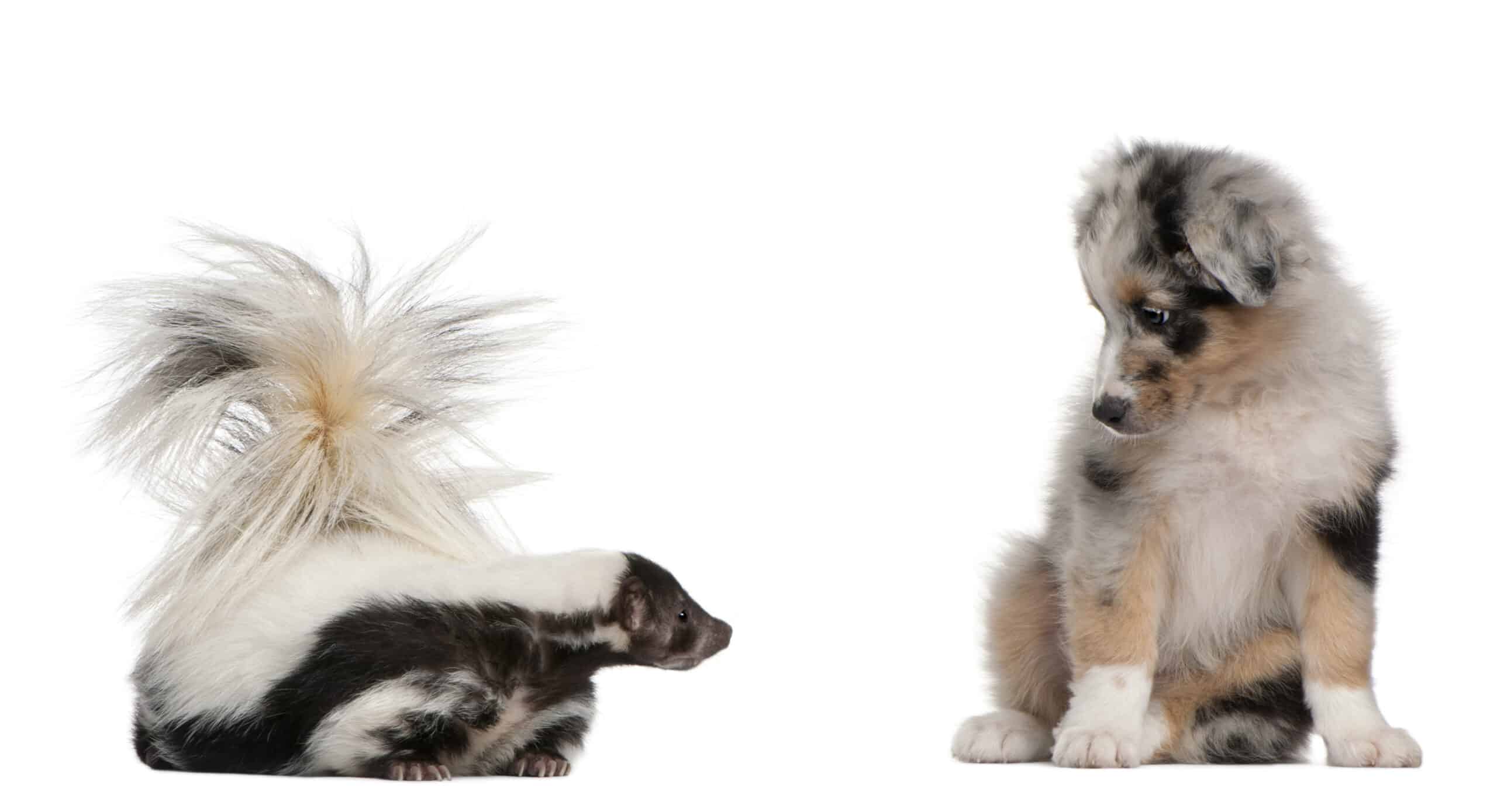
They can be a nuisance for pet owners, as they may eat pet food left outside or dig through garbage looking for food. If a pet encounters a skunk, it's important to keep them away to avoid getting sprayed. They can also carry diseases that can be transmitted to pets, so it's important to keep pets up to date on their vaccinations.
Skunks and Gardens
Skunks may be attracted to gardens, as they may find insects, grubs, or other small animals to eat. To keep them away from gardens, it's important to remove any potential food sources and to use fencing or other barriers.
Skunks and Garbage
They may be attracted to garbage, as they may find food or other items of interest. To avoid attracting them to garbage, it's important to keep garbage cans tightly closed and to store them in a secure location.
Skunk Sightings
If you see a skunk in your yard or neighborhood, it's important to give it space and avoid approaching it. Skunks may spray if they feel threatened, so it's important to keep a safe distance. If a skunk is causing damage or posing a threat, it's best to contact a wildlife removal professional to safely and humanely remove the skunk.
Skunks and Other Wildlife
They are nocturnal animals that are most active during the night. They are known to be very territorial and will defend their territory against intruders. Skunks are omnivores and feed on a variety of foods, including insects, small rodents, fruits, and vegetables.
However, they have a unique defense mechanism that makes them less vulnerable to predators. They can spray a foul-smelling liquid from their anal glands, which can cause temporary blindness and nausea in predators.
Foxes are also nocturnal animals that are known to be opportunistic feeders. They feed on a variety of foods, including small rodents, insects, fruits, and vegetables. Foxes are known to prey on them, but they are also preyed upon by larger predators such as coyotes and wolves.
Skunk Defense Mechanisms
Skunks are known for their potent spray, which they use as a defense mechanism when threatened. The spray is a mixture of chemicals that are released from the skunk's anal glands. The spray can travel up to 10 feet and is strong enough to cause temporary blindness and nausea.
When a skunk feels threatened, it will first try to warn its attacker by stomping its feet, hissing, and raising its tail. If the attacker does not back off, the skunk will turn around and lift its tail, preparing to spray.
The skunk spray is not only effective against predators but it can also be used to mark territory and deter other skunks from entering their space. The spray is also effective against humans, so it's important to keep a safe distance from skunks and avoid startling them.
Skunks are also known for their white stripe, which acts as a warning to potential predators. The stripe is a visual cue that signals to predators that the skunk is not to be messed with. The stripe is also a way for skunks to identify each other, as each skunk's stripe pattern is unique.
In summary, skunks have a powerful defense mechanism in the form of their spray, which they use when threatened. They also have a visual warning system in the form of their white stripe. It's important to keep a safe distance from skunks and avoid startling them to prevent getting sprayed.
Dealing with Skunks
Encountering skunks can be a nuisance, especially when they spray their unpleasant odor. However, there are ways to deal with them effectively and safely.
Repelling Skunks
Repelling skunks can be done using natural and chemical methods. Some natural methods include:
- Planting strong-smelling plants like lavender, mint, and rosemary around your property
- Placing citrus peels or ammonia-soaked rags around your yard
- Installing motion-activated sprinklers or lights to scare them away
Chemical methods include using skunk-repellent sprays, which can be found at most hardware or pest control stores.
Getting Rid of Skunks
If you have a skunk problem, it's best to call a professional pest control service. However, there are some things you can do to discourage them from sticking around:
- Remove any food sources, such as pet food or unsecured garbage cans
- Seal any entry points to your home or shed, such as gaps in the foundation or holes in the roof
- Use humane traps to catch and relocate them to a more suitable habitat
Dealing with The Smell
If you or your pet gets sprayed by a skunk, there are several remedies you can use to get rid of the smell:
- Wash affected areas with a mixture of hydrogen peroxide, baking soda, and dish soap
- Apply a commercial skunk odor remover
- Soak in a bath of tomato juice or vinegar
Skunk Behavior
Skunks are nocturnal scavengers that are attracted to food sources and shelter. They are also known for digging holes in lawns and gardens in search of insects. If you notice skunk tracks or digging in your yard, it's important to take preventative measures to discourage them from returning.
Home Remedies for Skunk Odor
If a skunk has sprayed you or your pet, you know how strong and unpleasant the odor can be. Fortunately, several home remedies can help neutralize the smell.
One common remedy is using a mixture of baking soda, hydrogen peroxide, and dish soap. Mix 1 quart of hydrogen peroxide, 1/4 cup of baking soda, and one teaspoon of dish soap in a large bowl. Apply the mixture to the affected area and let it sit for 5-10 minutes before rinsing it off with water.
Another popular remedy is using tomato juice. While it may not completely remove the smell, it can help mask it. Simply soak the affected area in tomato juice for 10-15 minutes, then rinse it off with water.
Vinegar is another effective remedy for skunk odor. Mix equal parts of vinegar and water and apply it to the affected area. Let it sit for a few minutes before rinsing it off with water.
Castor oil is a less commonly known remedy, but it can be effective in neutralizing skunk odor. Mix 1/4 cup of castor oil with one tablespoon of dish soap and apply it to the affected area. Let it sit for 5-10 minutes before rinsing it off with water.
It's important to note that these remedies may not work for everyone and in every situation. Additionally, it's important to avoid getting the mixture in the eyes, nose, or mouth. If the odor persists or if you experience any adverse reactions, seek medical attention immediately.
Skunks in Different Regions
Skunks are found throughout North and Central America, and their behavior can vary depending on the region they inhabit. Here are some factors that can affect when and where they come out:
Canada
In Canada, they are most active during the warmer months, typically from April to October. However, in colder regions, they may hibernate during the winter. Skunks are adaptable creatures and can live in a variety of habitats, including forests, fields, and urban areas.
Fields
Skunks often make their homes in fields, where they can find food sources such as insects, grubs, and small rodents. They are also known to raid gardens and trash cans in search of food. If you live near a field, it's important to secure your garbage cans and keep your garden well-maintained to reduce the likelihood of attracting them.
Food Sources
Skunks are opportunistic feeders and will eat a wide variety of foods, including insects, small mammals, fruit, and vegetables. They are particularly fond of grubs, which can be found in lawns and gardens. If you have a skunk problem, removing their food sources can be an effective way to encourage them to move on.
Forest
In forested areas, skunks tend to be more nocturnal, coming out at night to forage for food. They may also seek shelter in hollow logs or under fallen trees. If you're hiking in a forested area, it's important to be aware of your surroundings and avoid startling any skunks you may encounter.
Overall, they are fascinating creatures that play an important role in their ecosystems. By understanding their behavior and habitat preferences, we can coexist with these animals in a safe and respectful manner.
Frequently Asked Questions
How far can skunks spray?
They can spray up to 15 feet away, but they usually only spray when they feel threatened or scared. If you encounter a skunk, it's best to keep your distance and avoid startling it.
Do skunks come out in the rain?
They are nocturnal animals and will come out at night regardless of the weather. However, heavy rain or thunderstorms may cause them to stay in their dens.
Do skunks come out during the day?
They are primarily nocturnal animals, but they may come out during the day if they feel threatened or if they are searching for food. However, it's rare to see them during the day.
When do skunks spray?
Skunks will spray as a defense mechanism when they feel threatened or scared. They will usually give a warning before spraying, such as stomping their feet or arching their back. If you encounter a skunk, it's best to slowly back away and give it plenty of space.
What do skunks eat?
They are omnivores and will eat a variety of foods, including insects, small mammals, fruits, and vegetables. They are also known to eat garbage and pet food left outside.
Where do skunks sleep during the day?
Skunks will typically sleep in dens during the day, such as under porches, decks, or sheds. They may also use abandoned burrows or hollow logs as their den. If you suspect a skunk is living on your property, it's best to contact a professional to safely remove it.